Showing posts with label inclusion. Show all posts

2 December 2019

Celebrating difference

God made us all, each wonderfully different...


(Church of England, Common Worship service of Holy Communion)


School Chaplain Reverend Jo Davis reflects on the importance of seeking to understand the differences and similarities in everyone we meet whilst, above all, treating them with kindness as a fellow human being...

Since I arrived at Bryanston 10 weeks ago, I have been told many times that there is no Bryanston type. That our aim is not to fit everyone into a mould, but to support them to become a fuller, brighter version of themselves.

I believe that everyone in the world has an equal right to exist and have their own beliefs and opinions. As a Chaplain, it is my job to support and pastorally care for everyone in the school, religious or not. If their faith differs from mine, it’s my responsibility to ensure that they are supported in their faith.


You rejoice in our differences, yet we make them a cause of enmity.


As an RS teacher, I have taught all six of the major faiths including atheism. I consider it a privilege to do so, but I also think it is hugely important. Just because I disagree with someone, it doesn’t mean that I do not need to understand their point of view. Learning about Islam to teach it to GCSE level has given me many opportunities to reflect on my own faith. If we don’t understand the opposing view to our own, how do we know that we don’t agree with it? We should seek to understand the differences and similarities in everyone we meet whilst, above all, treating them with kindness as a fellow human being.

This culminated on Wednesday last week in my attending a book signing with Richard Dawkins in Bath, accompanied by a group of A2 pupils. A man who, it could be said, has views diametrically opposed to mine, but I was still looking forward to it. 

When doing some research beforehand I was staggered to come across a video entitled ‘Love Letters to Richard Dawkins’ where he reads out some of the horrifically offensive emails he receives, many from people claiming to be Christian, but wishing him a horrible death and eternal suffering in hell. 

I could not believe it, and it spurred me on to attend the signing and be nice to the man. But I wanted to do more than that and felt called to show him a different side of Christianity, the faith that teaches me to love God, and love my neighbour as myself. Love is the most important command, and overrides everything else. I have recently discovered the Craftivist movement, which seeks to spend time and effort protesting positively, quietly and kindly through handmade items. I set about creating a gift for Richard that celebrated our commonality. Nothing inflammatory or that challenged his world view, apart from maybe what Christians were like. It was a challenge to find him after the Q&A session, but I managed it, and was able to shake his hand and pass over my letter and gift.


I was amazed to receive a personal email from him later in the evening, thanking me for the gift. 
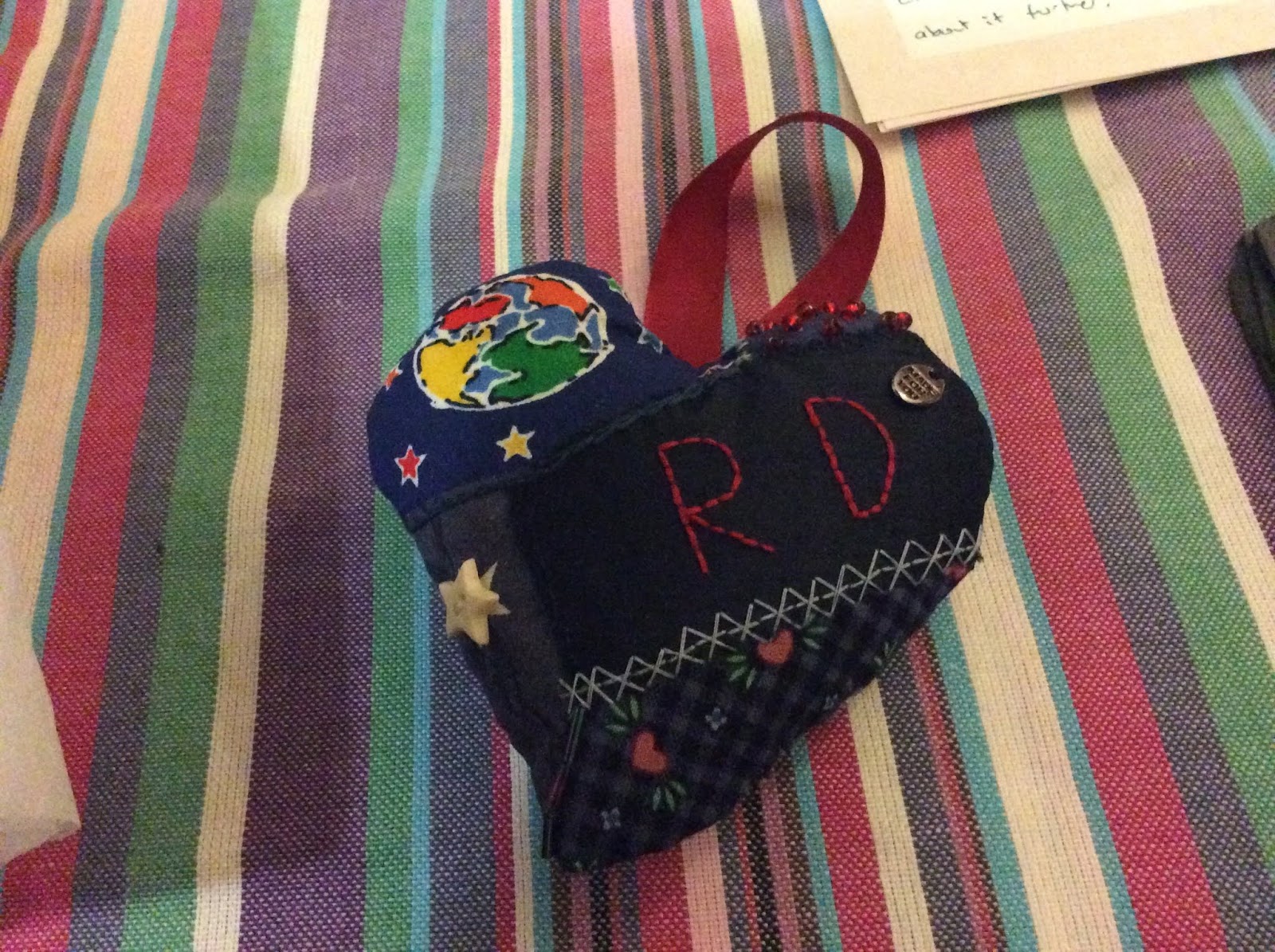
This week I have challenged all the D pupils to investigate a view that is the opposite to one they hold, to do some research and look into their similarities and differences. Difference should be celebrated, not feared.

As a result, I’m really looking forward to Bryanston’s Craftivist Group, an extra-curricular activity (ECA) which I will be hosting from January. Craftivists aim to change the world through well-thought-out, quiet and kind acts of loving protest.

30 November 2018

The Value of a Gold Standard


Bryanston was recently delighted and honoured to be awarded Stonewall’s Gold School Champion Award in recognition of the school’s work over the past three years with regard to LGBT+ awareness and inclusion. Ian McClary, the school’s LGBT+ lead, writes…

On 6 September 2018 the Indian Supreme Court unanimously voted to repeal its colonial-era law which criminalised homosexuality - a cause for great celebration, not only for India’s LGBT+ community, but also for countless others who want them to be able to live and love, free from fear and discrimination. There might well be a long way to go before prevailing attitudes catch up with this change, but it is nevertheless an important step forward in the world’s largest democracy.

It wasn’t so very long ago that the UK took a similar, though more tentative step, in 1967, to partially decriminalise homosexuality. Indeed, it wasn’t until the first decade of the 21st Century that we made the more significant strides forward, both in terms of legislation and general attitudes. Many will remember the controversial Section 28 of the Local Government Act, introduced in 1988, which effectively ensured a culture of silence about and discrimination of LGBT+ people and issues in schools until 2003, when it was repealed. The only positive aspect of its legacy (and, I am sure, an unintended one on the part of the government at the time) was that it inspired the formation of Stonewall, which has become the largest LGBT rights charity in Europe.

Their extremely successful School Champions Programme is something that Bryanston has been
involved with since 2015, and has helped us to make our own strides forward with regard to LGBT awareness and inclusion. Each year we have worked towards a range of increasingly ambitious targets relating to school policies, challenging homophobia, biphobia and transphobia (HBT), supporting LGBT+ pupils and embedding awareness in the wider curriculum and the school community. In 2016 we achieved their Bronze award in recognition of our efforts and, in 2017, their Silver award for our continued work in these areas. This year we become one of only a handful of schools in the UK to be granted their Gold award as we demonstrate sustained evidence of our long-term commitment to LGBT+ inclusion and awareness in the school.

So what do these awards say about us as a school? Bryanston has always been a school in which the individual can thrive, but we tended to assume that we were LGBT+ aware and inclusive without doing anything actively about it. These awards demonstrate not only that we have thought a great deal about how we operate and what life is like at Bryanston for LGBT+ people, but also that we have been much more proactive in ‘promot[ing] respect and understanding of LGBT+ people and issues’ (Equality Act 2010). But we haven’t done it as a box ticking exercise simply to comply with this particular piece of legislation. Nor has it been just about getting the award, but rather embedding best practice and ensuring that it continues. Just as in the classroom - it’s not the qualification but rather the journey of learning taken as a whole which is more important. It is wonderful, of course, to know that we have achieved Stonewall’s gold standard, but we are acutely aware that our work does not end here; indeed, once a standard is reached it needs to be maintained - in a community which replenishes itself by almost a quarter each year, we need to continue to encourage and support, and celebrate. 

Where the School Champions awards have been extremely useful is by helping Bryanston to structure its work as we develop and evolve in this area. Take our dress code for example: it was always possible to wear it in a gender-neutral way but its most recent iteration has now evolved to be fully inclusive of trans and non-binary identities. Furthermore, our pupil-led Equality Society is now in its fifth year - the result of sustained interest and effort on the part of the pupils who regularly meet to explore a range of issues relating to equality, diversity and human rights, including sexuality and gender identity. I hope that LGBT+ pupils at Bryanston feel increasingly comfortable being who they are at school and coming out if they feel the time is right for them. I hope they, and all pupils, know that any form of HBT language or behaviour is unacceptable at Bryanston, that LGBT+ pupils (and staff) are valued for who they are, and that they are, in the words of Stonewall’s motto, ‘[accepted] without exception’.

As an OB and recent A2 Current Affairs speaker put it, ‘Returning to Bryanston after 25 years it was inspiring to see the journey of inclusion the school has been on. When I was at the school, Section 28 was still in force, the HIV epidemic prompted scaremongering which demonised gay people and the only time trans people were visible was in freakshow journalism - it wasn’t a good time for me to be a gay teenager struggling with their sexuality and I can’t say those memories are my happiest. To see now how the school is embedding inclusion across policies is great, but what is really inspiring is the way it is manifesting this in the culture and ethos of the school so that every young person in its care can truly find their authentic self in a supportive environment where teachers and pupils are visible allies and stepping up to create a more inclusive future’. (1)

It’s important to ensure that all our pupils thrive, including the 10% of our pupils who do not identify as heterosexual or who are questioning their gender identity (2). Uninformed young people are vulnerable young people, LGBT+ or otherwise, and it is concerning that LGBT+ young people experience higher rates of mental ill health on account of negative stereotypes, prejudice and HBT (3). Although this is, I am glad to say, gradually being reduced in the UK, thanks in no small part to the work of organisations like Stonewall, we need to continue to ensure, for our part, that Bryanston is a welcoming, respectful and supportive community for LGBT+ people. Having been privileged enough to have had the opportunity to celebrate our wedding at school, my husband and I can attest to just how welcoming it is!

(1) Dr Justin Varney OB - National Strategic Advisor, Public Health England.
(2) Bryanston School pupil LGBT survey 2016.
(3) Stonewall School Report 2017.