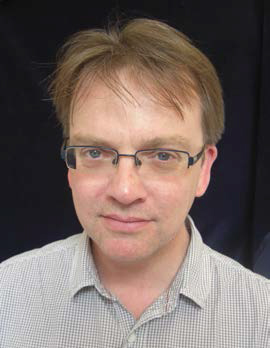
Bryanston's Head of Mathematics, Alex Hartley, explains why Maths is more relevant outside the classroom than you might think.
As interesting and enjoyable as it is to use a pair of compasses to construct the perpendicular bisector of a straight line, I do confess that pupils have asked me when exactly they will use this skill in real life. Further, I will even concede that my usual response – that it will form part of their iGCSE examinations – is, in the language of youngsters today, a bit lame. So, in this post I will attempt to explain more generally what our pupils learn through studying Mathematics, and whether or not there is more to it than just getting to the right answer.
With a new class, my first lesson of the academic year in September might well involve what I call the Handshakes Investigation. Working in groups, we establish, by getting out of our seats and getting involved, how many handshakes might take place when, say, three, or four, or another number of people meet for the first time. Building up a table of results for various numbers of people, we might seek to explain the patterns that are evident, refining our thoughts to form an algebraic equation and using this to test and predict future results. There’s a lot in there; elements of teamwork, of identifying patterns in numbers, and predicting and testing future results. At a more advanced level, pupils are generalising a particular rule and hence using algebra to construct a simple yet elegant and powerful formula that can be used not just in the cases already discussed, but many more besides. This investigation is a journey for each pupil and there’s a lot more to it than simply getting to the right answer. It also makes for a richer experience than simply working through problems from a textbook, although there is, of course, a time and a place for that and practice does indeed make perfect. Looking towards a real-life application, it is analogous to the problem of asking how many matches take place in a league in which a certain number of teams all play each other*.
Change in the world of mathematics teaching is approaching, with both the British curriculum and the IB offering new courses within the next few years. Following the Chancellor’s encouragement in his Autumn Statement (2017), we’ve offered Core Maths as an accessible course in the sixth form. Core Maths is entirely based around the practical applications of maths – mainly statistical and financial – that our pupils are likely to need both in their personal and professional lives, regardless of the career choices they make. We’re optimistic that our first cohort of pupils, who are just completing A3 (Year 12), will earn a good set of grades which will contribute to their overall accumulation of UCAS points and may enhance their choices at university. The IB curriculum will soon change too, and mathematics will be split into two subjects; Maths Analysis (which will contain a great deal of algebra and calculus, in common with A level courses), and Maths Applications (which will focus upon the uses of maths in real-life).
What would I do differently, if it were up to me to design the curriculum? Three things. First of all, I’d make iGCSE Mathematics, and particularly the foundation tier, focus more upon the applications of mathematics to real life. More questions about, for example, personal finance and perhaps we’d cope without a pair of compasses. Secondly, I’d insist that everybody studied mathematics at some level in the sixth form (just like in the IB) and finally, I’d set more questions that drew in a range of different skills, because that would encourage pupils to better understand the rich connections between each area of mathematics that they study.
So, there’s a lot to enjoy and savour in mathematics lessons; there is of course a range of skills and techniques which do need to be explicitly taught and practised to ensure fluency. But solving problems, talking things through, and creating and testing ideas is all in there too – and this is true for all pupils, no matter what their prior attainment or ability in Mathematics.
* h = ½ x n x (n-1) is the formula, where h is the number of handshakes, and n the number of people involved. Relating this to sports fixtures, 20 Premier League teams could play each other in ½ of 20 x 19 = 190 matches, but overall 380 matches are played each season because teams meet both home and away.
You can follow Bryanston Mathematics on Twitter here @BryanstonMaths.
Showing posts with label bigger picture. Show all posts
15 June 2018
16 June 2017
Sharing ideas
This week our Deputy Head (Academic), Dr David James, reflects on our recent Education Summit and the future of schools post election.
On Wednesday 7 June Bryanston held its first Education Summit. Our strapline was: ‘delivering a world class education in turbulent times’. Just how turbulent these times are was driven home the following day when the first results from the general election started to come in. With so much uncertainty affecting so many aspects of this country’s future it seemed particularly important to bring people together to discuss what were the biggest issues facing schools today, and how could they be resolved.
And so we invited some of the most influential speakers working in education to give us their insights, and over 400 delegates arrived to listen, take notes, debate and disagree. Those attending came from all sectors: primary, prep, maintained and fee-paying secondary, and there were representatives from higher education as well. Themes developed over the course of a fascinating day: the role that technology could play was explored by Ian Fordham, Head of Education at Microsoft UK. Award-winning teacher Paul Turner looked at how technology could be used meaningfully in the classroom, and there were other sessions by, among others, Crispin Weston, James Penny and Jane Basnett, which looked at how far technology could shape learning. The answer? Quite a lot, but only if the teachers are fully trained. And that requires investment, of resources, trust ... and time.
And time was a theme running through the day. Professor AC Grayling discussed ‘educating the future in the present’, and Martin Robinson explored similar themes arguing for a return to the ‘trivium’ style of teaching which places emphasis on grammar, rhetoric and logic. Russell Speirs discussed the ten biggest educational trends in 2017, and a panel of prep school heads looked at the future of prep schools in a turbulent world with ever-changing priorities (and demographics).
In such uncertain times people often reach out to others, for guidance, and support. And colleagues from maintained schools discussed the nature of partnerships, both within the sector and across independent and state. Sharing, it was felt by many, results in strength, not dilution. But the pressures schools are under was also debated, with one panel of head teachers arguing about whether leading a school at such times is the ‘impossible job’. It was heartening to hear so many school leaders say it remained such a valuable and rewarding job, but the responsibilities are growing, and resources are shrinking.
There was also a strong evidence-based strand running through and across sessions. Experienced teachers and researchers such as Nick Rose (on using memory research in the classroom), Lucy Crehan (on the role that culture plays in creating education superpowers), David Didau (on the research that helps us make kids more academically successful), and, in the final keynote, leading educationalist Professor Dylan Wiliam talked about how we can create the schools our children need (which are different from the ones they actually have). It was stimulating, provocative stuff.
I end where I began: on uncertainty. Now that we know the result of the general election, it seems less likely that we will see a return to grammar schools, but what fills that policy hole? How important will schools be to a government that is struggling to retain a working majority while it is negotiating Brexit? My guess is that schools will slide down the political agenda quite quickly, and that is potentially very serious for the future of our country. On a more positive note, the summit showed what is possible when teachers come together, and share ideas, good practice, and find local solutions to perennial problems. Of course, such things cannot be scaled up to a national level, but perhaps this is the most we can achieve in the immediate future, and indeed this might be enough to ensure our schools still help produce gifted students ready for the 21st century. That is the hope, and until these turbulent times settle down, that might be just enough.
On Wednesday 7 June Bryanston held its first Education Summit. Our strapline was: ‘delivering a world class education in turbulent times’. Just how turbulent these times are was driven home the following day when the first results from the general election started to come in. With so much uncertainty affecting so many aspects of this country’s future it seemed particularly important to bring people together to discuss what were the biggest issues facing schools today, and how could they be resolved.
And so we invited some of the most influential speakers working in education to give us their insights, and over 400 delegates arrived to listen, take notes, debate and disagree. Those attending came from all sectors: primary, prep, maintained and fee-paying secondary, and there were representatives from higher education as well. Themes developed over the course of a fascinating day: the role that technology could play was explored by Ian Fordham, Head of Education at Microsoft UK. Award-winning teacher Paul Turner looked at how technology could be used meaningfully in the classroom, and there were other sessions by, among others, Crispin Weston, James Penny and Jane Basnett, which looked at how far technology could shape learning. The answer? Quite a lot, but only if the teachers are fully trained. And that requires investment, of resources, trust ... and time.
And time was a theme running through the day. Professor AC Grayling discussed ‘educating the future in the present’, and Martin Robinson explored similar themes arguing for a return to the ‘trivium’ style of teaching which places emphasis on grammar, rhetoric and logic. Russell Speirs discussed the ten biggest educational trends in 2017, and a panel of prep school heads looked at the future of prep schools in a turbulent world with ever-changing priorities (and demographics).
In such uncertain times people often reach out to others, for guidance, and support. And colleagues from maintained schools discussed the nature of partnerships, both within the sector and across independent and state. Sharing, it was felt by many, results in strength, not dilution. But the pressures schools are under was also debated, with one panel of head teachers arguing about whether leading a school at such times is the ‘impossible job’. It was heartening to hear so many school leaders say it remained such a valuable and rewarding job, but the responsibilities are growing, and resources are shrinking.
There was also a strong evidence-based strand running through and across sessions. Experienced teachers and researchers such as Nick Rose (on using memory research in the classroom), Lucy Crehan (on the role that culture plays in creating education superpowers), David Didau (on the research that helps us make kids more academically successful), and, in the final keynote, leading educationalist Professor Dylan Wiliam talked about how we can create the schools our children need (which are different from the ones they actually have). It was stimulating, provocative stuff.
I end where I began: on uncertainty. Now that we know the result of the general election, it seems less likely that we will see a return to grammar schools, but what fills that policy hole? How important will schools be to a government that is struggling to retain a working majority while it is negotiating Brexit? My guess is that schools will slide down the political agenda quite quickly, and that is potentially very serious for the future of our country. On a more positive note, the summit showed what is possible when teachers come together, and share ideas, good practice, and find local solutions to perennial problems. Of course, such things cannot be scaled up to a national level, but perhaps this is the most we can achieve in the immediate future, and indeed this might be enough to ensure our schools still help produce gifted students ready for the 21st century. That is the hope, and until these turbulent times settle down, that might be just enough.
2 December 2016
Do nothing, Christmas is coming!
In this week’s blog the School Chaplain, Canon Andrew Haviland, suggests we regain our sense of perspective amid the frenzied approach to Christmas.
However, for many the preparations can be tough. There are people who are struggling to get everything done, there are those who are finding it hard to make ends meet and there are those who are anxious about being alone when so many others seem to be enjoying themselves. We need to do what we can for all those who will find it difficult and challenging. As a school we know that we can make such a difference when we put our minds to it. This term as a community we have raised a huge amount of money during the Charities Fair, given boxes of food to the Blandford Foodbank at our Harvest Festival, reached out to those who might be on their own through our Tuesday Club, remembered the sacrifice of those who enable us to live in a free country at Remembrance Day and much more.
As I write the Black Friday sales have been and gone, and the Christmas countdown is well underway. The frenzied activity leading up to 25 December is wonderfully exciting. Here at Bryanston, a huge Christmas tree is already dominating the main hall and in millions of homes, schools and businesses across the world people are starting their preparations. Christmas is rightly a great opportunity to decorate, get in touch and to celebrate with family and friends.
However, for many the preparations can be tough. There are people who are struggling to get everything done, there are those who are finding it hard to make ends meet and there are those who are anxious about being alone when so many others seem to be enjoying themselves. We need to do what we can for all those who will find it difficult and challenging. As a school we know that we can make such a difference when we put our minds to it. This term as a community we have raised a huge amount of money during the Charities Fair, given boxes of food to the Blandford Foodbank at our Harvest Festival, reached out to those who might be on their own through our Tuesday Club, remembered the sacrifice of those who enable us to live in a free country at Remembrance Day and much more.
There is a small book that I discovered a few years ago (and have mentioned before) entitled Do Nothing, Christmas is Coming. How can anyone suggest such a thing – there is so much to do!
What this book dares to suggest is that during this season we should try and slow down. We try so hard to get everything just right for Christmas, but at times we can lose our sense of perspective. Let’s think of Mary and Joseph. Were they ready? Not really. She was engaged but also a pregnant teenager trying to get to Bethlehem. The place where Jesus was born was far from ideal, an unhygienic stable was not the best place to give birth. The shepherds who came to visit the new born baby came straight from the fields with no time to change into their Sunday best. After a few days Joseph and Mary had to flee Bethlehem under threat of death from Herod and became refugees in Egypt for a time. All this was hardly well prepared.
Perhaps what this book is suggesting is that we do the things that really matter and not try too hard to make everything perfect. The world was certainly not ready for Jesus’ arrival, but he came anyway.
My hope and prayer for this Advent, as we lead ever quickly to Christmas Day, is that we can all slow down just a little, take our time to focus on things that really matter and those we love, and to help those who have so very little. If we can do that then maybe, just maybe, the true Christmas gift, the message of love of God through Jesus, can sustain the world even more effectively in 2017.
What this book dares to suggest is that during this season we should try and slow down. We try so hard to get everything just right for Christmas, but at times we can lose our sense of perspective. Let’s think of Mary and Joseph. Were they ready? Not really. She was engaged but also a pregnant teenager trying to get to Bethlehem. The place where Jesus was born was far from ideal, an unhygienic stable was not the best place to give birth. The shepherds who came to visit the new born baby came straight from the fields with no time to change into their Sunday best. After a few days Joseph and Mary had to flee Bethlehem under threat of death from Herod and became refugees in Egypt for a time. All this was hardly well prepared.
Perhaps what this book is suggesting is that we do the things that really matter and not try too hard to make everything perfect. The world was certainly not ready for Jesus’ arrival, but he came anyway.
My hope and prayer for this Advent, as we lead ever quickly to Christmas Day, is that we can all slow down just a little, take our time to focus on things that really matter and those we love, and to help those who have so very little. If we can do that then maybe, just maybe, the true Christmas gift, the message of love of God through Jesus, can sustain the world even more effectively in 2017.
11 March 2016
A2 Charity Weekend
This week we are delighted to welcome the Heads of School, Nancy and Sam, as guest bloggers. Alongside their team of prefects, they recently organised the annual A2 Charity Weekend, in which the entire year group worked together towards the common goal of raising funds for their chosen charity. At this year’s event pupils surpassed their fundraising target and you can read more about the weekend here. In their guest post the Heads of School explain why they chose PumpAid as their charity and what they learnt from organising the weekend.
Two weeks ago we led the A2 year group (year 13) in organising a fundraising event for a charity of our choice. This year we chose to support PumpAid, a charity based in London but which operates in Malawi. Our aim was to sponsor the building of a water pump for a village in rural Malawi.
Having done some research it really hit home how pressing the issue of access to clean water is. We had no idea the conditions that some people were living in, and indeed how far reaching the problem is. Water-borne diseases are currently the main contributor to child mortality in Malawi, so there is an obvious health impact caused by the lack of access to clean water. However, what we hadn’t appreciated was the additional social issues the problem creates. For example, the long distances that children, mostly young girls, have to walk every day to collect water is having an impact on their education, as they have less time to spend in school studying. Hopefully with the funds that we have raised we can stop this for around 240 people and provide a community with water for generations to come.
In terms of what we have learnt from the weekend itself, the experience has not only been incredibly humbling, it has also taught us a lot about organising charitable events like this. It was such a good thing to do and has really helped us to appreciate not only how lucky we are at Bryanston, but also how we can truly change other people’s lives through small events like these.
As part of the weekend a Bryanston pupil composed and performed a song especially for the event to support PumpAid. You can watch the video of it below.
Two weeks ago we led the A2 year group (year 13) in organising a fundraising event for a charity of our choice. This year we chose to support PumpAid, a charity based in London but which operates in Malawi. Our aim was to sponsor the building of a water pump for a village in rural Malawi.
Having done some research it really hit home how pressing the issue of access to clean water is. We had no idea the conditions that some people were living in, and indeed how far reaching the problem is. Water-borne diseases are currently the main contributor to child mortality in Malawi, so there is an obvious health impact caused by the lack of access to clean water. However, what we hadn’t appreciated was the additional social issues the problem creates. For example, the long distances that children, mostly young girls, have to walk every day to collect water is having an impact on their education, as they have less time to spend in school studying. Hopefully with the funds that we have raised we can stop this for around 240 people and provide a community with water for generations to come.
In terms of what we have learnt from the weekend itself, the experience has not only been incredibly humbling, it has also taught us a lot about organising charitable events like this. It was such a good thing to do and has really helped us to appreciate not only how lucky we are at Bryanston, but also how we can truly change other people’s lives through small events like these.
As part of the weekend a Bryanston pupil composed and performed a song especially for the event to support PumpAid. You can watch the video of it below.
23 January 2015
Golden mean
It’s that time of year again where lots of the media is shrieking at us about detoxing. The saturnalian month of December is over; puritanical January is with us, and with it the annual call for self-flagellation. Saturnalia (feast) and puritanism (fasting) are, in my opinion, two sides of the same coin and both great for feeling satisfied, or even smug, with or about yourself. My view is that both activities demand a pretty unpleasant level of self-absorption, and as I get older I find both more and more questionable. It may be that I am turning into a follower of Cicero.
Cicero, the modern world’s godfather of Stoicism, is a fascinating man in many, many regards (not least the political life he led), but it is moral letters, his philosophy, based on Zeno and others, which interest me most at this time of year. He knew a thing or two about those ‘two imposters’ of Kipling’s famous poem, and dealt with triumph and disaster in barrowfuls in his own life. The most moving of all his letters for me are those dealing with his profound grief upon the death of his young daughter Tullia, and making sense of that grief as a stoic, a follower of the Greek philosophical school of thought which argued that you should learn to take both the ups and downs in life with comparative calm and aim always for a ‘golden mean’.
Cicero is an example to us, not just because of his very considerable professional and political triumphs (rather too loudly self-proclaimed for modern ears), but more so because of his disasters, personal and public. As a Stoic he aimed not to ricochet from the negative to the positive, and vice versa, but to keep an even keel throughout all that life threw at him. And it threw a lot. Not just the death of his Tullia but also the turning to ashes of his (utterly naïve, with our advantage of hindsight) plans to save the Roman Republic from men such as Pompey, Mark Anthony, and Octavian.
Did Cicero learn from his mistakes? Can we learn from ours? Is a golden mean achievable or is life forever a roller-coaster of success, disaster; happiness, disappointment; excess and fasting? Is the answer to live a life away from all fear of the negative? Should we, like Epicureans of old, withdraw from difficulty and keep ourselves safe and secure from the world?
No. That’s an impossible option, particularly nowadays in a world which is so very much more interconnected even than when John Donne wrote his famous line, ‘No man is an island entire of itself’. I think the answer to living a happy and successful life is that we accept that we make mistakes, that we learn from our mistakes, that we grow stronger from the difficulties hurled at us, that we share our experiences and support one another. We celebrate all the joys of life and don’t nag ourselves for doing so. And we don’t weigh our worthiness by how many pounds we have shed in January or how many perfect mince pies we have baked in December.
I recommend at this time of year a healthy disregard for those who want to make life a misery and who take superficial things too seriously. I recommend aiming instead for that very old fashioned virtue, humility, and for an acceptance that an awful lot of the concerns we are invited to care for are about as trivial as one could dream of. I recommend Cicero and Stoicism in times of trial. I recommend looking outwards and eschewing self-absorption. The minute you can see your life as part of something more important than just yourself, then this seems to me to make much more sense of the lumps and bumps in life, and of the joys too.
So my resolution for 2015 is to be less self absorbed. To learn from my mistakes. To embrace difficulty. To aim for humility. To weave my life’s thread in amongst those of others’. To keep on learning.
I wish you all a wonderful 2015.
5 December 2014
Unchanging truths
It’s almost the end of term and the time of year when I reflect upon rather a lot of reports. This year I may be writing slightly fewer owing to being called for jury service. I shall be doing all I possibly can and Pete Simpson, Director of Studies, will this time potentially be writing some on my behalf. Some question the need for me to be writing these individual reports each term when there are so many other demands at this time, but I enjoy the idea that I can get to know, at varying levels, all 670 pupils in the school and the reports are one way of doing that in a small and unobtrusive way.
It’s important when dealing with the daily expectations of a school in my role as Head that I do not, in dealing with the detail, lose a sense of the bigger picture. This emphasis on the bigger picture is something I talk about to the school in assembly pretty regularly over the course of the second half of this term. I do this mostly in terms of encouraging an attitude of looking out from Bryanston, and of raising pleasing sums of money for charitable work, which we have supported for well over ten years now in Nepal and India.
The bigger picture is also important in terms of our giving pupils the right sort of access to facts and encouraging the use of critical faculties upon the understanding of key world issues, whether extremism or Ebola. Pete Simpson’s memorable assembly recently also prompted us to think of homelessness and as a school we organised a frugal lunch that day to raise funds for Centrepoint. It’s so important that we think about these big ideas and issues. As Bertrand Russell put it, to keep us on our toes, “Most people would rather die than think, and most people do.”
Last week I spoke to the school about what matters, about what remains (when you are on old lady like me) of what you learned in school. Poems come unprompted into my head at the most unlikely times, from ‘Macavity, the Mystery Cat’ (I was about nine when I learned that) to William Johnson Cory’s translation of ‘They told me, Heracleitus…’ (I came across this when I was about 15). And then there are all those impenetrable things I learned in maths (x = -b + or – the square root of b squared - 4ac, all divided by 2a). These things never quite leave you. They just ricochet around one’s memory without our even realising.
William Johnson Cory, the translator of my remembered poem, also said interesting things about education. Here are some of his thoughts on the matter below:
“At school you are engaged not so much in acquiring knowledge as in making mental efforts under criticism. A certain amount of knowledge you can indeed with average faculties acquire so as to retain; nor need you regret the hours you spent on much that is forgotten, for the shadow of lost knowledge at least protects you from many illusions. But you go to a great school not so much for knowledge as for arts and habits; for the habit of attention, for the art of expression, for the art of assuming at a moment’s notice a new intellectual position, for the art of entering quickly into another person’s thoughts, for the habit of submitting to censure and refutation, for the art of indicating assent or dissent in graduated terms, for the habit of regarding minute points of accuracy, for the art of working out what is possible in a given time, for taste, for discrimination, for mental courage, and for mental soberness. Above all, you go to a great school for self-knowledge.”
I think I almost entirely agree. School should certainly teach you how to think. The stuff you remember, what remains, can be odd and seemingly unconnected. But it’s the process of learning how to think, of how to ask and start to answer difficult questions, how to not just settle for pure blarney, and how to be fulfilled in life that matters. And however many changes to syllabus, to forms of examination, to marking, to assessment, nothing will change these basic unchanging truths of life.
It’s important when dealing with the daily expectations of a school in my role as Head that I do not, in dealing with the detail, lose a sense of the bigger picture. This emphasis on the bigger picture is something I talk about to the school in assembly pretty regularly over the course of the second half of this term. I do this mostly in terms of encouraging an attitude of looking out from Bryanston, and of raising pleasing sums of money for charitable work, which we have supported for well over ten years now in Nepal and India.
The bigger picture is also important in terms of our giving pupils the right sort of access to facts and encouraging the use of critical faculties upon the understanding of key world issues, whether extremism or Ebola. Pete Simpson’s memorable assembly recently also prompted us to think of homelessness and as a school we organised a frugal lunch that day to raise funds for Centrepoint. It’s so important that we think about these big ideas and issues. As Bertrand Russell put it, to keep us on our toes, “Most people would rather die than think, and most people do.”
Last week I spoke to the school about what matters, about what remains (when you are on old lady like me) of what you learned in school. Poems come unprompted into my head at the most unlikely times, from ‘Macavity, the Mystery Cat’ (I was about nine when I learned that) to William Johnson Cory’s translation of ‘They told me, Heracleitus…’ (I came across this when I was about 15). And then there are all those impenetrable things I learned in maths (x = -b + or – the square root of b squared - 4ac, all divided by 2a). These things never quite leave you. They just ricochet around one’s memory without our even realising.
William Johnson Cory, the translator of my remembered poem, also said interesting things about education. Here are some of his thoughts on the matter below:
“At school you are engaged not so much in acquiring knowledge as in making mental efforts under criticism. A certain amount of knowledge you can indeed with average faculties acquire so as to retain; nor need you regret the hours you spent on much that is forgotten, for the shadow of lost knowledge at least protects you from many illusions. But you go to a great school not so much for knowledge as for arts and habits; for the habit of attention, for the art of expression, for the art of assuming at a moment’s notice a new intellectual position, for the art of entering quickly into another person’s thoughts, for the habit of submitting to censure and refutation, for the art of indicating assent or dissent in graduated terms, for the habit of regarding minute points of accuracy, for the art of working out what is possible in a given time, for taste, for discrimination, for mental courage, and for mental soberness. Above all, you go to a great school for self-knowledge.”
I think I almost entirely agree. School should certainly teach you how to think. The stuff you remember, what remains, can be odd and seemingly unconnected. But it’s the process of learning how to think, of how to ask and start to answer difficult questions, how to not just settle for pure blarney, and how to be fulfilled in life that matters. And however many changes to syllabus, to forms of examination, to marking, to assessment, nothing will change these basic unchanging truths of life.
Subscribe to:
Posts (Atom)