12 August 2020

14 February 2020

How to encourage a love of STEM from an early age

Head of Science Nick Welford explores ways in which to encourage scientific investigation from an early age and explains why Bryanston pupils are given opportunities to solve problems through research and experimentation… from Nobel Prize winner Fred Sanger, and beyond!

Experimentation is part of human nature; our biological evolution has progressed hand in hand with technological revolution. Feats of engineering have only become possible as our understanding of materials and our ability to manipulate them have improved. Extending scientific knowledge requires theoretical grounding in a subject, a hypothesis and the ability to test it in a valid manner. Our inherent inquisitive nature and ability to communicate has resulted in the collective knowledge that we currently enjoy.

My father spent many years as a Research and Development Officer for the RNLI, and as such he was asked to undertake various investigations, from boat design to protective clothing to self-righting apparatus. When tasked with assessing commercial night vision goggles, he designed a test that involved a venue that allowed a decent line of sight (Worbarrow Bay), a willing volunteer (me as a ten-year-old) and a selection of night vision goggles. In the dead of night (without a moon), I was given a radio and instructed to walk alone around the bay, then he would try and find me with various image intensifiers. Although I was too young to realise it, I had been exposed to scientific method; he had an independent variable (brand of goggles), a dependent variable (how well he could see me) and control variables (constantly low ambient light and my distance from him). With childhood experiences such as these, it was only natural for me to follow sciences at A level and university.

Studying science at Bryanston
So how should we foster an interest in science and encourage STEM activities in young people today? The answer lies with posing problems and giving opportunities to solve them through research and experimentation. Often the key to engaging pupils is to NOT give them the answer! Another factor is to present a problem that is commensurate with the level of understanding. For those who like crosswords, the level of difficulty is all important; too easy and a clue is not engaging; too hard and one gives up. The trick as a science teacher is to find that ‘Goldilocks’ zone when presenting a practical problem.

In both GCSE and A level science lessons, Bryanston pupils are regularly offered the opportunity to undertake practical work to solve a question. A large proportion of an IB science subject is assessed on a pupil’s ability to formulate a research question and devise experiments to test it. Pupils can also engage in extra-curricular opportunities; our Head of Physics recently challenged a group of girls to improve farming methods in Zambia. The team were subsequently awarded second place in the International Soroptimist STEM Challenge. KS5 pupils can undertake the CREST challenge, giving them the chance to research scientific topics and present their findings to their peers. For the first time this year, A3 pupils from Bryanston go up against Eton pupils in an essay competition, written on their own choice of engineering topic.

Frederick Sanger, Old Bryanstonian and Nobel Prize winner
Such activities have always been offered to Bryanston pupils; in the 1930s Fred Sanger finished his school certificate early, which allowed him a year of experimenting with his chemistry master, Geoffrey Ordish. Sanger went on to win two Nobel Prizes; his second was for a creative stroke of genius where he combined some relatively straightforward biochemical steps to provide a method for ‘reading’ DNA. As I write this, the Novel Coronavirus is steadily making its way across the planet. Identifying the DNA sequence of this virus (discoverable using a method based on Sanger’s work) may well prove instrumental in resolving the epidemic.

Bryanston's Sanger Centre
There will always be many unanswered science questions and many curious young people; tapping into that curiosity is the key for any society. Harvesting energy from fusion, advancing cancer treatment or creating methods for adapting and mitigating climate change. The question is… where should we start?

You can follow Bryanston's science department on Twitter @BrySci.

31 January 2020

Food for thought: an insight into Bryanston’s catering department


In this special Q&A, Bryanston’s Catering Manager Mike Thorne explains the approach taken to feeding Bryanston’s 600+ pupils three times a day, the increasing interest in veganism and the importance of encouraging pupils to make their own choices when it comes to food…

It goes without saying that it takes an enormous amount of preparation and thorough organisation to be able to feed Bryanston’s 600+ pupils three times a day as well as staff at lunch time. How do you go about planning for this? Are the menus prepared each week or do you have them mapped out months in advance?

Yes, our menus are set out in advance. We work out how many portions of each particular main course we need, taking into account numerous other factors, such as the need for packed lunches or other special events that are going on around the School.

You get used to the pupils – what they eat, what they like and what they don’t like. When we do a lunch service, we always write down what’s left and how many portions we have remaining at the end. We do this every day to help us plan for next time. We never want to run out of anything for the last sitting: we always aim for the last sitting to have access to the same choices as the first sitting.

We have recipes for all of our main courses, which helps us know exactly how much food to order. We create a three-week cycle of menus offering light bites, chef’s theatre, traditional and salads, and we have to order three days in advance. It’s not as easy as just ordering one day and getting it the next; you have to be organised in advance to know what you’re going to need in three days’ time. If there are functions and events on in addition to the day-to-day, this all needs to be taken into account as well. Weekends are often complex to plan for, working out which pupils are in School and which are out.

Take last week as an example, in addition to the day-to-day, we had a mammoth week, including two important dinners on Friday and Saturday evening, feeding more than 1,000 people down in the grounds for the Prep Schools’ Girls Netball Tournament and more than 500 teas for the Ken Baily Races. This all needed to be planned and ordered in advance.

There’s constantly plenty to think about. We do a weekly plan so that the entire department has an insight into what’s going on and where. These plans are done three weeks in advance and as something new comes in, we’ll add this to the planner and circulate amongst the team. Events range from feeding 1,000 pupils to sorting out teas and coffees for a small meeting of 12 people.

Your team goes above and beyond to ensure that meals are always varied and exciting. With the exception of staples like Friday fish and chips, how do you maintain pupils’ interest and enthusiasm?

We operate on a seasonal three-week cycle of menus so there’s always variety. In the evenings, we offer four themes for two days and then over the next two days, we’ll offer another four themes. So, if there’s something the pupils really like they can have it the next night, and if they don’t, or they want something else, then they can choose something different.

Pupils like choice and they love to build their own meal. The ‘meat and two veg’ that we served years ago is long gone. We’ve seen a terrific shift over the years; food is fantastic, and trends change so quickly, this is why working in catering is so exciting – we’re always trying to do better and come up with new ideas.

Have you noticed an increased interest in vegan food?

Oh, absolutely. Just last Thursday we did a ‘no meat’ day, which went down really well. We didn’t forewarn people in advance, we just got on with it. If we had told pupils in advance, we might have been met with some opposition and would probably have heard things like ‘Oh, I don’t think that’s a good idea’ or ‘We won’t like that.’ But in truth, we only received positive comments following serving vegetarian and vegan dishes. And in my opinion, serving only vegetarian and vegan food once a month doesn’t hurt anyone. In fact, it can only be a positive.

We like to get people tasting different types of plant-based foods and grains and encouraging them to try different dishes that they wouldn’t normally choose. Then when they try them, they realise how nice it actually is. I used to love meat and still do but I’m going to be honest and say that I wouldn’t have ordinarily chosen a salad a few years back. Now even if meat is an option, I will go for a salad instead. I can’t believe how much less meat I eat now.

The team work really hard on offering a full range of salads, vegetables and grains. It’s hard work – you can’t just order in the types of salads that we serve; the team prepare these from scratch, we don’t just get it from a tub.

I still think we’ve got a lot of work to do for vegetarians and vegans. There’s always more we can do. We found that we were getting quite a few requests for vegan options and we were always having to prepare something separate, whereas now we almost always have a vegan dish on offer for the entire school. I think it’s the direction that things are going. It’s nice to give everyone this choice.

By reducing the consumption of meat, the land animals were farmed on can, in turn, be used for forestry or other uses, which then helps to cut emissions. I’m always keen on doing what we can to help the environment.

Chartwells’ motto (Bryanston’s catering service) is ‘Eat, Learn, Live’. How does your team ensure that Bryanston pupils continue to develop a positive and healthy relationship with food?

We encourage our pupils to think about eating dishes they wouldn’t normally choose. What I want them to do is understand the choices available to them. I want them to think about the food they eat, the times of the day they’re eating and how that makes them feel. I want them to acknowledge how their body and mind feel when they eat sugar and tuck late at night.

The School is working hard on offering nutritional guidance: a letter went out to parents at the beginning of the term and we are continuing to work hard on improving what is on offer in the Café.

It’s tricky. You can’t stand there and tell the pupils what to do or tell them what they can or can’t eat. It’s about introducing new and healthier options more subtly and educating them to understand why those options are a wiser choice. You still have to give them what they enjoy – you know, they love their Bratwurst sausages every so often, and fish and chips. If you took these items away, then there would be a riot, I think!

The Café offers fresh pots of fruit and yoghurt, celery/carrot/cucumber crudités with houmous or vegetable dip, in addition to cakes and sweeter offerings. We’re trying to reduce the amount of sweets on show and offering fizzy drinks with less sugar content. We’ve also made some small changes to the pizzas we offer in the evenings: we only sell these at 9pm in the evenings, so as not to compete with the dining room, and we’ve weighed out the mozzarella so that not quite so much cheese is going on. The majority of pizzas you can buy these days are loaded with grease, fat and cheese; ours, in comparison, are much better for you.

I’ve learnt over the years that if you take everything away then the pupils won’t be happy; you have to do it in a gradual way, not one big hit. It’s about finding a way of introducing new things gradually without forcing our pupils to change, in the hope that they’ll realise that it’s for their own good that these things are happening.

If you stand in the food court and watch the pupils come through, it’s a lovely thing. They choose such a great variety; no two plates are the same. Somebody might choose a wrap with a salad and the person they’re with might choose a wrap with vegetables. It’s rewarding to see them making their own choices.

Nutrition expert Lucinda Miller visited the School at the start of term to speak with staff and explored the correlation between junk food and poor mental health. How much correlation do you see between the two?

Our dining room is a positive and happy environment. There’s always a great vibe in the dining room and we put this down to the fact there are healthy and nutritious dishes on offer, helping to generate a positive mindset and fuel their inquisitive minds.

From a safeguarding perspective, of course there will be times when we notice that a pupil might seem down or particularly quiet, and we will always raise this with their tutor or Hsm. The Café staff are particularly strong at this; they have a great rapport with the pupils and can always sense when something is up and will raise this with the pastoral team.

When it comes to the cakes and sweeter treats in the Café, it’s important to mention that all of these are homemade; they’re not produced with loads of chemicals or designed to last for months, they’re all made using natural products and without preservatives.

We are privileged that the behaviour in the dining room is so good. I put this down to the fact that the pupils know we listen to their feedback. Our pupil-run Food Committee meet regularly and feed back their thoughts to us, which we then see if we can implement.

Are there recurring themes that come up when the Food Committee provides their feedback?

The most recent Food Committee meeting was held last week. We tend to discuss four main areas: the Café, packed meals, breakfast and morning/afternoon breaks. We chat generally about what they think of these four areas, what they like and what they don’t like and what they wish could be changed.

Recently, one of the girls commented that she’d like to know in advance what the soup of the day is, so this is now clearly visible on the menu prior to entering the dining hall. This helps children think about their meals and will hopefully help encourage more of them to enjoy homemade soup and homemade bread and provide some variety to their diet.

Another example of a small change brought about by the Food Committee, is that we have recently introduced flavoured teas at morning break. I try very hard to never say no to anything – I always say that I will look into it because it’s important to listen to the pupils and value their opinions.

What else do you think helps contribute to the positive atmosphere experienced by all in the dining room?

There’s always one or two of us on duty to answer any questions that pupils or staff might have. A combination of us work from 7am to 8pm so there’s always somebody they can ask if they’re not sure of anything. We want it to always be a happy environment – it’s a pleasure to listen to the buzz in the dining room when the pupils are eating, it’s such a lovely vibe.


How do you safely cater for pupils and staff with allergies and intolerances, or other dietary requirements?

We operate a four-check process. We’ll give the chef a blank allergen sheet and these allergen sheets are completed every day. We fill out a fresh sheet every day because the ingredients used might be slightly different, even if it’s the same recipe from a few days ago. The chef will write down the allergens and will then check it with someone else in the kitchen. It will then be brought to the managers to check over and once approved, will be typed up and given back to the kitchen. It’s so important to get this right when taking into consideration coeliac, dairy free and nut allergies. There are currently six pupils allergic to peanuts. We occasionally might include walnuts in a Waldorf salad, but this would always be clearly labelled and those that do suffer with a nut allergy know to be extra vigilant.

With regards to sustainability and environmentally friendly initiatives, can you talk us through any large-scale projects that help contribute to reducing waste?

The biggest change we have made of late is to packed meals, which now go into bento boxes. These are reusable and are accompanied by a reusable water bottle. The aim is that the pupils bring them back to us so that we can use them again. Packed meals before consisted of single-use water bottles and a sandwich pack in a plastic bag, and so the plastic wastage was high. Having made this change, we now save an average of 400 plastic bottles a week.

Everything in the Café is reusable or biodegradable. In addition, all the cardboard boxes that food is delivered in gets recycled. We also recycle plastic and glass bottles, as well as the oil used in our fryers. We’re always listening to the pupil-run Green Committee and if there are any changes we can make to help the environment then we will of course consider them. I’m a firm believer that everyone can do a little bit to help the environment, rather than one person trying to do it all. It’s all about making small, positive changes.

Moving on to Bryanston’s legendary theme nights, do you have a favourite that has stood out over recent years?

We do three major theme nights a year, one per term. A lot of planning goes into these, including getting the dining room decorated. We also run smaller theme nights at the weekends and some during the week as well. I think the Harry Potter night is by far my favourite! I still hear the pupils raving about this night and it was certainly a lot of fun for us to organise and on the night itself.

One question to end with: you’re surrounded by food and constantly thinking about food... but if you had to pick a favourite meal, what would it be?

Probably what I had last night, a lovely rib of beef. That’s not to say that I don’t enjoy eating vegetarian and vegan food though, because I certainly do. I really enjoy having salads without any meat too – it’s all about striking a balance. 

You can follow @ChartwellsBry on Twitter.


17 January 2020

Why teens need proper nourishment

Nutrition expert Lucinda Miller (NatureDoc Clinic) was recently invited to Bryanston to deliver training for all staff on how food choices affect teenagers. In this special guest post, Lucinda explains why encouraging teens to make healthy food choices is important now and even more so for their future health and happiness…

When some teens seem to get by on crisps, chips, sweets and fizzy drinks, you could be forgiven for thinking ‘What’s all the fuss about healthy food?’ The truth is that medical research is increasingly establishing the links between ultra-processed and sugar-laden food, and poor mental health, lower IQ, and physical health conditions. Conversely, a well-balanced diet, avoiding the nasties and loading up on veg is associated with better outcomes in these areas.

But healthy food doesn’t have as good marketing or instant gratification as sweet treats, brightly coloured packets, or convenient ready-meals, and teens are especially susceptible to the lure of these things. And when the human brain continues developing well into their twenties, it’s worth trying to get the good habits in before it’s too late.

Food and diet choices are extremely complex these days, and the media sends lots of mixed messages which can confuse even the most educated. This can manifest in a myriad of different relationships with food amongst teenage children. For example:

· some teens live to eat, have a passion for food and love to try new things;

· others are more cautious and conservative when it comes to what they eat;

· then there are those who don’t seem to know the difference between a meal and a snack, and they graze all day;

· the latest Instagram foodie trend captivates others; and

· some have developed such a poor relationship with food that they control what, when and how much they eat, which can potentially lead to eating disorders.

Sometimes when kids are let loose for the first time in a boarding environment, their eating habits go downhill, as this can be the first time that they have had to make their own food choices. If left to their own devices, their tuck boxes, Amazon Pantry orders and toast habits can start to crowd out their appetite for the nourishing meals provided at school. I know that Bryanston is keen to nurture healthy eating habits in all its pupils, so that by the time pupils leave the School, they are ready for full independence and able to make healthy choices for themselves. This is why Bryanston is encouraging healthier tuck box choices.

Whether you are a foodie or not, it’s important to understand why a healthy diet is so important for your children, and I am going to share with you some key snippets of recent research focused on child and teen nutrition. It’s not too late to upgrade your child’s eating habits and encourage them to eat more of the good stuff. So here goes...

Why at least five a day?

Firstly, children benefit from eating at least five different fruits, vegetables and salads a day and the variety really counts. Studies have found that children and adolescents who consume more fresh fruit and veg have higher self-esteem, are more creative and are less likely to be bullied – so it’s certainly not just about weight and growth.

The gut

The gut microbiome is a rapidly growing area of research in both child and adult health, and vegetables, fruits, salads, pulses, seeds, and live yoghurt help to build healthy, diverse bacterial colonies in the gut. There were over 15,000 papers published on the microbiome in 2019 alone, and studies have now found how important probiotic foods and supplements are for gut health in a huge variety of conditions that affect teenagers including eczema, asthma and acne; as well as the formation of neurotransmitters - the brain hormones that regulate impulsivity, motivation and keep teens calm and well balanced. 

Healthy food and IQ 

IQ is also known to be affected by diet, and research has found that a diet high in processed sugary foods can reduce IQ and equally a healthy diet full of fresh food can increase IQ. School performance was also measured in a study of over 350,000 teenagers and those who consumed healthy foods instead of ultra-processed foods generally performed better. It was found that eating three times per day without skipping meals (especially breakfast) and frequent intakes of fresh fruits, vegetables and milk were related to good school performance. However, regularly eating convenience foods including soft drinks, instant noodles, fast foods, sweets and chocolate more than seven times a week showed a correlation with poor school performance.

Inflammation and mental health


A healthy diet is also key for keeping chronic inflammation in check. Pesky inflammation drives many of our modern-day disease states including autoimmune conditions, cancers and cardiovascular problems, so it’s super important to take this seriously. Chronic inflammation is also closely linked to negative mental health outcomes, and it’s thought that a diet rich in freshly prepared nutritious food is a critical step to keeping children happy, healthy and well.

Much of the research on chronic inflammation is drawn from the work of Professor Edward Bullmore, who is the Head of Psychiatry Research at Cambridge University. He writes on the link between inflammation and depression in his book The Inflamed Mind. The AVON study is an insightful research study where 4,500 perfectly happy, healthy and well nine-year-old children were tested for inflammation markers, and those with higher inflammatory markers were more likely to develop depression and psychosis by 18 years. This data is so significant that researchers are using it for predicting bipolar disease, eating disorders and even suicide risk.

It is thought that food choices and lifestyle can make all the difference at preventing this inflammation from building up and causing havoc later on down the line. A Mediterranean diet rich in fresh vegetables, salads, fruits, olive oil, fish, wholegrains, pulses and seeds help to reduce inflammation, whereas a diet rich in ultra-processed convenience foods drives inflammation up.

This is why encouraging your children to make healthy food choices at mealtimes, and in the comfort of their boarding houses is important now and even more so for their future health and happiness.

Lucinda Miller is the clinical lead of the NatureDoc team, specialising in child and teen nutrition and functional medicine. She is the author of The Good Stuff cookbook and is a mum of three. www.naturedoc.co.uk

References:
On carrots and curiosity: eating fruit and vegetables is associated with greater flourishing in daily life. https://onlinelibrary.wiley.com/doi/abs/10.1111/bjhp.12113

Many apples a day keep the blues away--daily experiences of negative and positive affect and food consumption in young adults. White BA et al. https://www.ncbi.nlm.nih.gov/pubmed/23347122

Let them eat fruit! The effect of fruit and vegetable consumption on psychological well-being in young adults: A randomized controlled trial. Conner TS et al. https://www.ncbi.nlm.nih.gov/pubmed/28158239

The microbiome and atopic eczema: More than skin deep. https://www.ncbi.nlm.nih.gov/pubmed/26821151

The role of the microbiome in childhood asthma. https://www.ncbi.nlm.nih.gov/pubmed/29130800

Potential Role of the Microbiome in Acne: A Comprehensive Review https://www.ncbi.nlm.nih.gov/pmc/articles/PMC6678709/

Are dietary patterns in childhood associated with IQ at 8 years of age? A population-based cohort study. https://www.ncbi.nlm.nih.gov/pubmed/21300993

Dietary Habits Are Associated With School Performance in Adolescents https://www.ncbi.nlm.nih.gov/pmc/articles/PMC4998375/

Is there an association between dietary intake and academic achievement: a systematic review. https://www.ncbi.nlm.nih.gov/pubmed/27599886

Association of serum interleukin 6 and C-reactive protein in childhood with depression and psychosis in young adult life: a population-based longitudinal study. https://www.ncbi.nlm.nih.gov/pubmed/25133871

Childhood interleukin-6, C-reactive protein and atopic disorders as risk factors for hypomanic symptoms in young adulthood: a longitudinal birth cohort study. https://www.cambridge.org/core/journals/psychological-medicine/article/childhood-interleukin6-creactive-protein-and-atopic-disorders-as-risk-factors-for-hypomanic-symptoms-in-young-adulthood-a-longitudinal-birth-cohort-study/C177043D1EDA4F5F5849EAE1EC02F9E9

Inflammatory Markers in Anorexia Nervosa: An Exploratory Study. https://www.ncbi.nlm.nih.gov/pubmed/30355978

An inflammatory profile linked to increased suicide risk. https://www.ncbi.nlm.nih.gov/pubmed/30654266

The Dietary Inflammatory Index: A New Tool for Assessing Diet Quality Based on Inflammatory Potential https://www.researchgate.net/publication/264554956_The_Dietary_Inflammatory_Index_A_New_Tool_for_Assessing_Diet_Quality_Based_on_Inflammatory_Potential

2 December 2019

Celebrating difference

God made us all, each wonderfully different...


(Church of England, Common Worship service of Holy Communion)


School Chaplain Reverend Jo Davis reflects on the importance of seeking to understand the differences and similarities in everyone we meet whilst, above all, treating them with kindness as a fellow human being...

Since I arrived at Bryanston 10 weeks ago, I have been told many times that there is no Bryanston type. That our aim is not to fit everyone into a mould, but to support them to become a fuller, brighter version of themselves.

I believe that everyone in the world has an equal right to exist and have their own beliefs and opinions. As a Chaplain, it is my job to support and pastorally care for everyone in the school, religious or not. If their faith differs from mine, it’s my responsibility to ensure that they are supported in their faith.


You rejoice in our differences, yet we make them a cause of enmity.


As an RS teacher, I have taught all six of the major faiths including atheism. I consider it a privilege to do so, but I also think it is hugely important. Just because I disagree with someone, it doesn’t mean that I do not need to understand their point of view. Learning about Islam to teach it to GCSE level has given me many opportunities to reflect on my own faith. If we don’t understand the opposing view to our own, how do we know that we don’t agree with it? We should seek to understand the differences and similarities in everyone we meet whilst, above all, treating them with kindness as a fellow human being.

This culminated on Wednesday last week in my attending a book signing with Richard Dawkins in Bath, accompanied by a group of A2 pupils. A man who, it could be said, has views diametrically opposed to mine, but I was still looking forward to it. 

When doing some research beforehand I was staggered to come across a video entitled ‘Love Letters to Richard Dawkins’ where he reads out some of the horrifically offensive emails he receives, many from people claiming to be Christian, but wishing him a horrible death and eternal suffering in hell. 

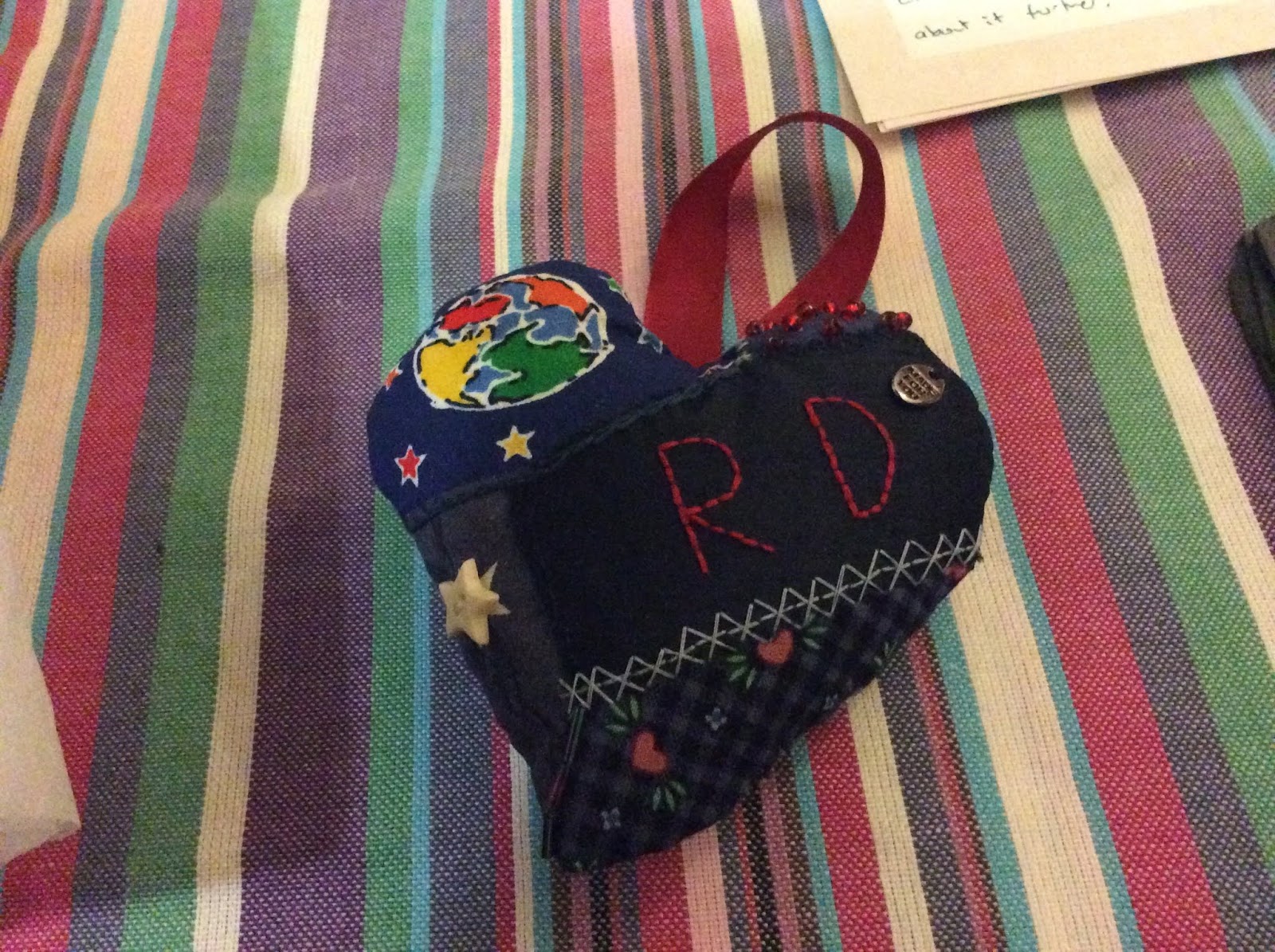
I could not believe it, and it spurred me on to attend the signing and be nice to the man. But I wanted to do more than that and felt called to show him a different side of Christianity, the faith that teaches me to love God, and love my neighbour as myself. Love is the most important command, and overrides everything else. I have recently discovered the Craftivist movement, which seeks to spend time and effort protesting positively, quietly and kindly through handmade items. I set about creating a gift for Richard that celebrated our commonality. Nothing inflammatory or that challenged his world view, apart from maybe what Christians were like. It was a challenge to find him after the Q&A session, but I managed it, and was able to shake his hand and pass over my letter and gift.


I was amazed to receive a personal email from him later in the evening, thanking me for the gift. 

This week I have challenged all the D pupils to investigate a view that is the opposite to one they hold, to do some research and look into their similarities and differences. Difference should be celebrated, not feared.

As a result, I’m really looking forward to Bryanston’s Craftivist Group, an extra-curricular activity (ECA) which I will be hosting from January. Craftivists aim to change the world through well-thought-out, quiet and kind acts of loving protest.

22 November 2019

Learning the importance of decision making and accepting responsibility through outdoor education

Head of Outdoor Education Duncan Curry explains why outdoor education plays such a crucial role at Bryanston and how it goes hand-in-hand with the challenges pupils face in everyday life…

Just recently, someone complimented me for making ‘playing outdoors’ into a career. Although this was certainly never my intention at school, 14 years in the outdoor education sector have made me realise that it has indeed been the perfect choice for me. Over the years, I’ve been lucky enough to witness the transformation of many pupils, from nervous, shy first years into powerful and confident sixth-form leavers.

I have always been sure of the benefits of outdoor education and spending time in the natural environment, which include but are not limited to: enhanced personal and social communication skills, increased physical health, enhanced mental and spiritual health, and an improved ability to assert personal control.

As a department, we believe that it’s often what happens outside the classroom that pupils remember most from their school days. That’s why we greatly value the outdoor education programme at Bryanston and work hard to ensure that pupils can transfer emotional strength gained during these activities and use their experiences to their advantage in meeting and overcoming the challenges they face in the classroom and everyday life.

Whether it’s striving for higher grades, forging supportive and productive relationships with others or engaging with the world around us, outdoor education makes us all stronger, more resilient and more likely to achieve our full potential.

In life we need role models. We can be taught the theory of action but until we see this in practice, we don’t fully understand what is required of us. Most of us are lucky enough to gather this information through our parents or siblings, but the older we get, the more challenging it is to find suitable role models.

The best role models work even harder in their absence. For my own, I created two figures sitting on each shoulder, the first my university tutor, and the second my head of department in my first job. Climbing high above the ground in the Italian Dolomites, leading pupils at 5,000 metres in the Indian Himalaya, or balancing along a ridge in the Scottish Highlands, Lee and Rupert would keep me on track. If I was about to rush a dangerous move, or take a shortcut with my rope work, they would immediately put me in place. Their words would echo back to me from a lesson learnt in the past, ‘Take your time, check that knot, tread carefully, stop, turn back or move fast’.

When I am asked what the best part of my job is, my answer is that I am able to work with the same pupils for five years whilst they are at Bryanston. This is a great deal of time to impart as much knowledge as possible and see significant developments. I now realise the important influence that a teacher can have on a young adult and I wonder how many shoulders I might now be sitting on? This is a powerful reality check and ensures that my lessons are succinct, clear and ultimately safe: perhaps the next time a pupil is tying into a rope, rather than having the luxury of a qualified instructor, they could be about to embark on a challenging adventure with a friend.

The beauty of the outdoors is there are very few rules. The freedom found when exploring, either by foot, by boat or through climbing, is huge. I remember being asked on Snowdon what time the rangers would be shutting the paths. Of course, this would never happen. Sunrise or sunset on Snowdon, when the crowds have disappeared, is certainly the best time to appreciate the mountain. It would be wrong for paths to be shut because of the apparent risk. Outdoor education, or adventuring in the outdoors, is one of the few environments left to us where we have to think for ourselves and accept the responsibility. If you walk into Coire an t’Sneachda in the Scottish winter and on to Carn Etchachan, you had better have a map and a good awareness of tough navigation. There will be no one to help you on the featureless Cairngorm Plateau as the early night draws in and you need to find your way home.

I believe outdoor education at Bryanston plays a crucial role in strengthening our pupils through their experiences. For young adults growing up in the present day, learning the importance of decision making and accepting responsibility for their own actions is a very valuable lesson. It is becoming more and more challenging to be allowed to make mistakes but only through our mistakes do we learn and develop. If a mistake can be made under a watchful eye, it can be a lesson learnt rather than one from which to run away. Once we have learnt these lessons under the guidance of a role model, we are then ready to experience them for ourselves.

4 November 2019

Political education in schools is imperative and must become a priority

Head of Politics William Bridges reflects on the importance of political education in schools and how best to engage pupils in political discussion both in the classroom and at home… 

British politics. Is it broken?


If it’s not yet broken, it’s certainly creaking under immense pressure. So how do we solve it? How do we repair the division and return to the ‘normal’ British politics of the past (if that’s possible or even desirable)?

The answer is, perhaps, to quote Blair: “education, education, education.”

We’ve all done it. We’ve all got to the ballot with the intention to vote, only to get there, and not really know who to vote for. Some of us haven’t even made it to the polling station for the same reason. Many people only engage in politics through voting and there is the problem: if we don’t even know who to vote for, how can we even begin to solve the deep-seated ills that face British politics?

Who’s who? Who stands for what? What difference does my vote even make? These are some of the most frequently asked questions at the beginning of the A3 (lower sixth) Politics course. But they are also the same questions that are asked by D or C (Year 9 or 10) pupils in PSRE, in conversations in tutorials and by colleagues in the Common Room.

Pupils at Bryanston are enthused, engaged and willing to participate in politics if given the opportunity. The numbers of pupils studying Politics at A level continue to grow year on year; we have a thriving Model United Nations and Debating Society. New initiatives in D activities, The Cabinet (Bryanston’s first Politics magazine) and UK Parliament Week all give pupils more opportunities to participate in politics now than ever before.

As vital as this is, we must go further. In this increasingly volatile and dangerous world, where democracy appears to be under genuine threat, it’s the duty of all of us – teachers, parents and guardians – to be able to uphold the fundamental British values of democracy, the rule of law and tolerance. The real question is this: how can we be expected to uphold this if our own political education is poor or even non-existent?

I was recently lucky enough to spend three days in Parliament with 70 teachers taking part in UK Parliament’s Teachers’ Institute. Since its launch in 2006, the Teachers’ Institute has trained more than 800 teachers from across the UK, giving us a detailed understanding of the work of the House of Commons and Lords. Those selected to attend Teachers’ Institute go on to become UK Parliament Teacher Ambassadors for Parliament's Education and Engagement Service and train their students and colleagues about the role of the UK Parliament.

And this is where we can start to repair and rebuild our politics – in the classroom. We can’t just expect young people to respect democracy. We can’t just expect them to understand the rule of law. We can’t just expect them to accept parliamentary democracy as the form of government that works for them if they don’t know what it is or how it works.

How can you begin to fix a car that’s misfiring if you don’t even know what a spark plug is? You can’t - you have to learn what the spark plug is, what it does, and how to change it if it’s dead. More than that, you also have to learn that a misfiring car can be caused by more than a faulty spark plug. There isn’t just one answer to one problem.

The Teachers’ Institute taught us the importance of political education as a tool to help heal the divide in politics, and the importance of working with colleagues across a range of schools in order to achieve this.

But it isn’t just in the classroom where we can begin to fix these problems. Engaging pupils in discussion at home, probing their thoughts on the news and asking their opinions about the goings on in our country and across the world is as important.

Discussion lays a foundation stone of engagement that will later become participation. And if Brexit has told us anything, it is that young people have the potential to be a very powerful force in British politics. They may, in fact, even hold the solutions to release the pressure on the political system.

17 October 2019

Choosing the right path for the Sixth Form


In our latest blog, Head of Sixth Form, James Ralphs gives us his top tips for identifying which academic route is right for you...

The Sixth Form is a wonderful part of school life. It is a chance to widen your horizons from both an academic and co-curricular perspective. Even before you step through the threshold of the lower sixth, you are asked to select what you are going to study.

So, where do you start?

A levels, IBDP or IBCP?

At Bryanston we offer three different academic routes for the Sixth Form: A level, the International Baccalaureate Diploma Programme (IBDP) and the International Baccalaureate Career-related Programme (IBCP).


A level
IBDP
IBCP

No. of subjects

Minimum of 3

6 (3 at higher level and 3 at standard level)

Cambridge Technical and 2 Diploma subjects

For some pupils, the idea of being able to study a broad range of subjects through the IB is an exciting one. For others, having to learn English, Maths and a language, even at standard level, is a non-starter and therefore A levels would be the appropriate path to take. Although there is overlap between the subjects offered at IB and A level, the course content can vary considerably. Therefore, a careful consideration of each subject and programme is essential. Talk to your current teachers and make the most of the information available to you. Bryanston pupils attend a Sixth Form choices fair in the spring term of Year 11 as well as having access to the Sixth Form choices guide, which gives a detailed breakdown of each subject.

What are your strengths?

Although not a perfect science, performance at GCSE does have a correlation with progress made in the Sixth Form. Choosing subjects in which you have a particular strength would be wise. At Bryanston, all heads of department will be looking for a 6 or higher at GCSE in order to access the A level or IB higher level subject content. The step up in workload, per subject, is considerable from GCSE to Sixth Form. Having a particular interest in your choices will make the work outside the classroom a lot easier. It is important that you have a desire for deeper learning, and a willingness to read around each of your chosen subjects in order to give yourself the best opportunity to succeed. Are you somebody who would benefit from less weighting on exams? Choosing a subject or programme with coursework would spread deadlines throughout the year.

What is your next step?

What you choose can have an impact on your options after school. One of the ultimate goals for studying in the Sixth Form is to qualify for entry into whichever route you would like to go down next. If this is university, then you will want to choose subjects which give you the best opportunity of achieving top grades. Some degrees will have specific pre-requisite subjects. For example, studying Medicine usually requires both Chemistry and Biology (at higher level for IB) and the majority of the top Economics degrees require Mathematics. If you don’t have a particular degree or career in mind, pick subjects which complement each other and play to your academic strengths.

The decision of what to study in the Sixth Form shouldn’t be taken lightly. Discuss the advice above with your tutor throughout the rest of the autumn and spring terms. Speak to older pupils about their courses but ultimately ensure that the choices you make are right for you.